Transferable Development Rights are one of the most misunderstood — and most financially significant — tools in the Aspen and Pitkin County real estate market. If you own a historic home in town, hold backcountry acreage you can't build on, or you're trying to build a home larger than your neighborhood's baseline allows, TDRs likely sit somewhere between "useful to understand" and "absolutely essential to your plans."
I've spent my career working in this market, and I served as a Commissioner for the City of Aspen Planning and Zoning Commission — so I've seen how these rights are created, valued, and deployed from both sides of the table. This guide is meant to give you a clear, accurate picture of how the system actually works, what it's worth right now, and where you fit into it.
What Is an Aspen TDR?
A Transferable Development Right (TDR) is a market-based planning mechanism that restricts development in ecologically sensitive or rural areas and redirects that growth to locations better suited for density.
In terms of local law, both the City of Aspen Land Use Code (Title 26) and the Pitkin County Land Use Code formally codify the concept under the name Transferable Development Rights. The official framework defines a TDR as an irrevocable development credit generated by permanently severing the right to build from a government-designated "Sending Site" and transferring it to an approved "Receiver Site."
The baseline concept exists in jurisdictions across the United States. But in Aspen and Pitkin County, TDRs carry a radically heightened level of economic and structural significance — here, they function as a secondary, multi-million-dollar currency that dictates the absolute limits of luxury residential development.
Why TDRs Matter So Much in Aspen & Pitkin County
In most municipalities, a TDR program is a niche tool used occasionally to preserve farmland or a historic façade. In the Roaring Fork Valley, the hyper-localization of the TDR market is driven by three distinct regional dynamics.
1. The Shield Against the Growth Management Quota System (GMQS)
Pitkin County operates under a strict Growth Management Quota System (GMQS), established in 1978 to rigidly cap the pace and scale of free-market residential construction. Building a large home or creating a new residential lot through standard channels means navigating a competitive, slow-moving annual quota lottery.
Here's the exception that makes TDRs so valuable: under local code, a TDR provides an explicit exemption from the GMQS. Purchasing and redeeming a valid TDR certificate lets a property owner bypass the quota pool entirely — either to establish a new single-family residence development right or to legally expand floor area.
2. Square Footage as Currency
In Pitkin County, land use rules strictly limit the baseline floor area allowed for single-family homes. To build beyond those caps, developers must literally buy more space. Within unincorporated Pitkin County and the Aspen Urban Growth Boundary, each standard County TDR certificate grants exactly 2,500 square feet of additional floor area (or 1,000 square feet within specific Transitional Residential zones).
Because Aspen real estate values are among the highest per square foot in the world, the right to add 2,500 square feet to a home carries enormous financial leverage — often valuing individual certificates in the hundreds of thousands, and at times millions, of dollars.
3. Protection of the Rural/Remote Zone District
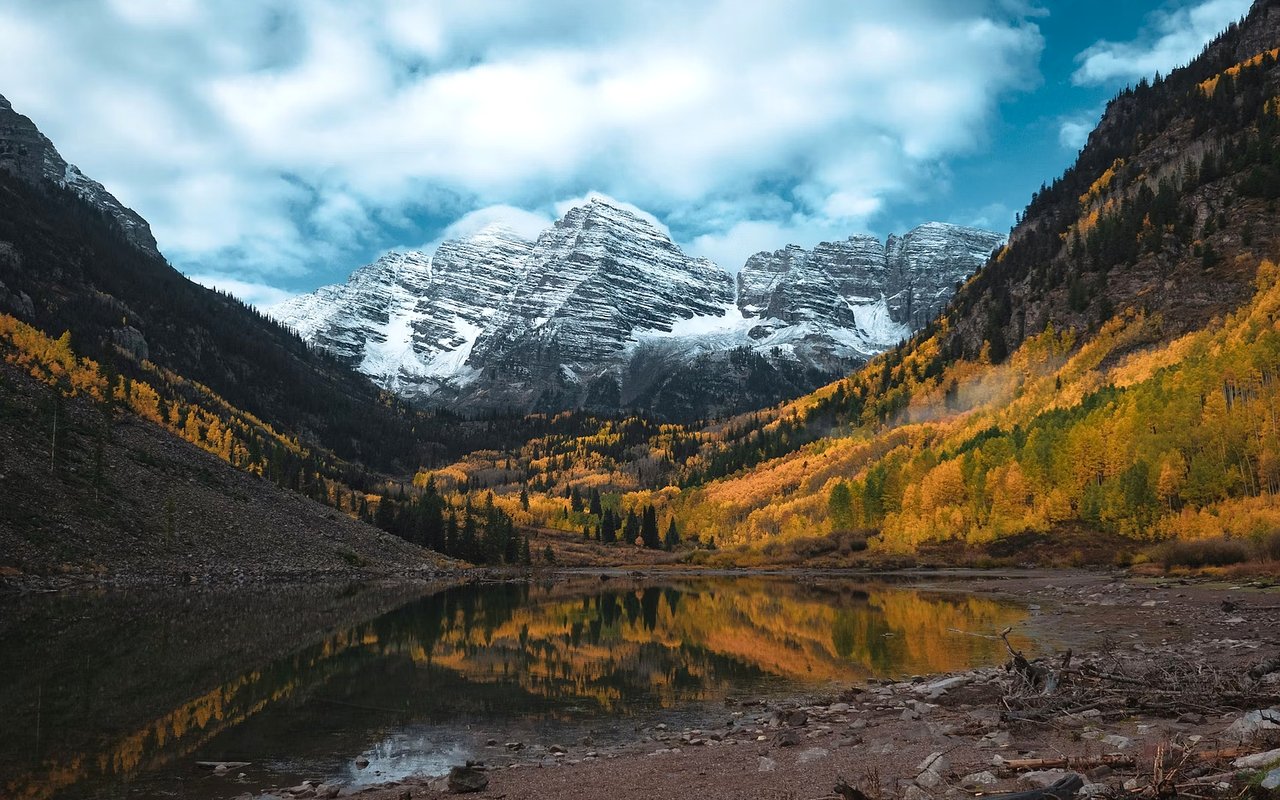
Aspen sits in a narrow valley surrounded by fragile backcountry alpine terrain. In 1994, Pitkin County created the Rural/Remote (R/R) Zone District to protect these wilderness areas from being fragmented by remote estates that strain emergency services and disrupt wildlife habitat.
The TDR system became the economic engine for that conservation goal. Backcountry landowners who are heavily restricted from developing their parcels are granted TDR certificates; by selling those certificates to buyers on the valley floor or within designated growth boundaries, they receive free-market compensation while their land is permanently protected through recorded restrictive covenants.
This is the philosophy underpinning both programs: conservation-plus-growth. Rather than suppressing value through heavy-handed downzoning — which often triggers regulatory "takings" lawsuits — local legislators designed a market-backed relief valve that separates the economic value of development from the physical land itself.
Two Separate Programs: The City and the County
This is the single most important thing to understand, and it's where most people get tripped up: the City of Aspen and Pitkin County run two entirely separate, distinct TDR programs. They share the same underlying concept, but they operate under completely different rules, feature wildly different square-footage conversions, and use separate eligibility criteria. Blending them into one idea is a frequent mistake that can compromise a project's regulatory standing.
Pitkin County: Backcountry & Environmental Protection (1994)
The county-wide framework was born from a stark early-1990s realization: large-scale luxury development was creeping into fragile alpine wilderness. To halt that fragmentation, the Board of County Commissioners (BOCC) established the program to redirect density out of the mountains and toward existing infrastructure.
- Authority: Pitkin County adopted its TDR program in 1994 alongside the creation of the Rural/Remote (R/R) Zone District. The policy goals and regulatory authority are codified in the Pitkin County Land Use Code, Chapter 2 (Growth Management) and Chapter 6 (Development Standards).
- Intent: The system was created to encourage relocating development from the backcountry toward areas closer to existing services and infrastructure, and to preserve rural character, open space, scenic features, and environmental and historic resources.
- The stakes: Without it, the high valleys around Aspen would be dotted with estates demanding roads, utilities, and emergency services — creating wildfire hazards and disrupting elk migration corridors. Instead, backcountry owners sever their building rights, leaving the land wild in perpetuity, and sell the resulting 2,500-square-foot credits to valley-floor developers.
The City of Aspen: Historic Preservation (2003)
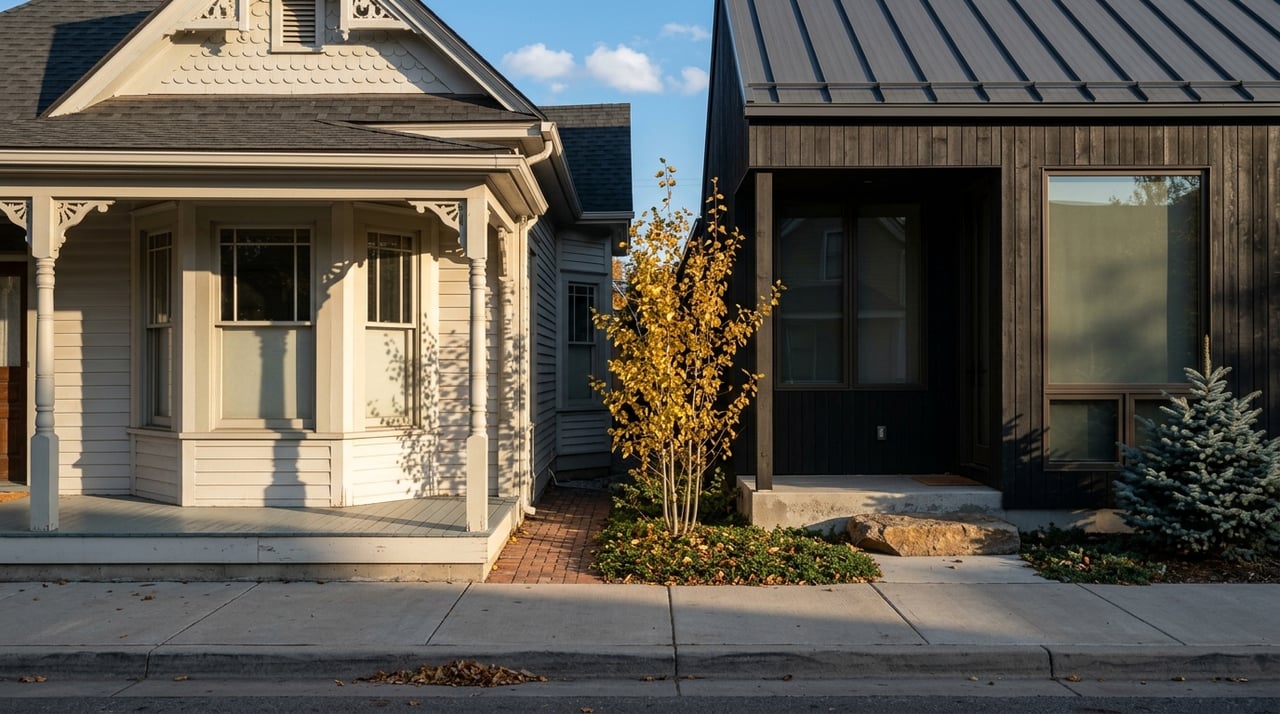
The City faced a different threat: the erasure of its physical history. Soaring land values meant small Victorian homes and miner's cabins from Aspen's 19th-century silver-boom era were being demolished to make way for large modern builds.
- Authority: The Aspen City Council adopted a sweeping package of zoning amendments in 2003, establishing the city's historic preservation TDR program, codified under City of Aspen Land Use Code, Chapter 26.535 (Transferable Development Rights).
- Intent: To create an aggressive economic incentive for voluntary preservation of designated landmarks. The program grants owners TDR certificates if they record a perpetual conservation easement protecting the landmark and restricting its footprint below what standard zoning would allow.
- The stakes: Aspen's historic core gives the town its unique character — the foundation of its resort and tourism economy. Under Chapter 26.535, for every 250 square feet of potential floor area an owner voluntarily forgoes on a landmarked site, the City issues one Historic TDR certificate.
Comparative Policy Framework
| Jurisdiction | Primary Legal Authority | Origin | Conservation Target | Core Incentive |
|---|---|---|---|---|
| Pitkin County | Land Use Code Chapters 2 & 6 | 1994 | Backcountry terrain, wildlife habitat, rural open space | Bypass the GMQS lottery; 2,500 sq. ft. per TDR |
| City of Aspen | Land Use Code Section 26.535 | 2003 | Silver-boom Victorians & designated Historic Landmarks | Monetize preserved space; 250 sq. ft. per TDR |
The one-way valve: Under Chapter 26.535, Aspen Historic TDRs can be exported out to Pitkin County receiver sites, provided county code permits the landing. But Pitkin County backcountry TDRs cannot be imported onto urban receiver sites inside city limits — the City guards its core against rural density transfers.
Sending Sites vs. Receiving Sites
Every TDR transaction needs two components: a Sending Site, where development rights are permanently extinguished, and a Receiving Site, where those rights are redeemed.
Pitkin County Sending Sites (the donors)
To qualify, a parcel must fit one of these classifications under the County Land Use Code:
- Rural/Remote (R/R) Zone District parcels, severing rights based on acreage formulas.
- Transitional Residential (TR-1 and TR-2) Zones — buffer zones between rural and denser areas.
- Conservation Development PUD (CD-PUD) — large clustered parcels of at least 160 acres.
- Limited Development Conservation Parcels — large parcels (minimum 160 acres) in agricultural or residential zones (AR-10, RS-20, RS-30, RS-35, or RS-160) that agree to halt future development.
- Constrained / Visually Constrained Sites the BOCC deems effectively undevelopable due to steep slopes, avalanche chutes, wetlands, or extreme visibility.
- County Historic Register properties.
Pitkin County Receiving Sites (the recipients)
- The reward: Each redeemed TDR typically grants 2,500 square feet of additional floor area (reduced to 1,000 square feet in the TR-2 zone) plus an absolute GMQS exemption.
- Where they land: Within unincorporated Pitkin County or the designated Aspen Urban Growth Boundary (UGB).
- Approval: Landing a TDR to establish a brand-new residential lot requires a One-Step Special Review and explicit BOCC approval. Using a TDR strictly to expand an existing home up to the zone's maximum cap can be permitted via streamlined administrative review in certain pre-approved subdivisions or the UGB.
City of Aspen Sending Sites (the donors)
The City's criteria are architectural, not environmental. A qualifying property under Chapter 26.535 must be:
- An individually designated Historic Landmark or a contributing structure in an official Historic District.
- Sited in specific low-to-medium density residential zones (typically single-family and duplex zones like R-6, R-15).
- Subject to a perpetual conservation easement giving up the right to demolish or expand past its historical footprint.
City of Aspen Receiving Sites (the recipients)
- The reward: Each City Historic TDR grants exactly 250 square feet of urban floor area.
- Where they land: Properties within city limits designated as eligible receiver sites — often commercial, mixed-use, or higher-density residential zones where the city encourages infill.
How the Math Actually Works
Because the City and County run independent frameworks, you're working with two completely different conversion matrices.
City of Aspen: 1 Certificate = 250 Sq. Ft.
Under Section 26.535, the City calculates a historic property's maximum allowable baseline floor area, subtracts the actual size of the historic structure, and converts the unbuilt "residual" square footage into TDRs — rounded down to the nearest 250. Once issued, the owner executes a perpetual deed restriction permanently capping the property at its current footprint. That severed square footage cannot be recovered, even if future zoning increases allowable density.
On the receiving end, extinguishing a certificate adds exactly 250 square feet to an approved municipal site — but not without limits. Low-to-medium density zones (like R-6 or R-15) are typically restricted to landing a maximum of 2 certificates (500 square feet total), and the addition must still meet all setback, height, and site-coverage rules.
Pitkin County: 1 Certificate = 2,500 Sq. Ft.
The County issues TDRs based on land acreage, not architecture:
- Rural/Remote (R/R) Zone: 1–69.9 acres = 1 TDR; 70–104.9 acres = 2 TDRs; 105–139.9 acres = 3 TDRs.
- TR-2 Zone: 1 TDR per 10 acres.
Upon severance, a perpetual conservation easement is recorded and the parcel is stripped of residential development rights — usable only for agriculture, open space, or non-commercial recreation. On the receiving end, a certificate yields a full 2,500-square-foot bonus and a GMQS exemption — dropping to 1,000 square feet if landed in a TR-2 zone, and never able to push a home past its neighborhood's absolute Final Maximum Floor Area cap.
Real-World Case Study
Case 1 — In-Town Historic Transfer (City of Aspen). An investor buys a historic miner's cabin on a 5,634 sq. ft. lot in the downtown R-6 zone. Code allows a maximum baseline house of 3,031 sq. ft.; the existing cabin is 2,405 sq. ft., leaving 626 sq. ft. of unbuilt potential. Because TDRs are issued in 250 sq. ft. increments, the City issues 2 Historic TDR Certificates (500 sq. ft.); the remaining 126 sq. ft. is forfeited, and the cabin is deed-restricted to 2,405 sq. ft. forever. A developer down the street buys both certificates and adds exactly 500 sq. ft. over the baseline on their new build.
Case 2 — Backcountry Transfer (Pitkin County). An owner holds an unbuilt 85-acre mining claim in a Rural/Remote zone. Under the acreage tiers, it qualifies for 2 TDR Certificates. The owner records a conservation easement — permanently destroying the right to build a home, driveway, or utility line on those 85 acres — and receives the certificates. A buyer with an existing 5,000 sq. ft. home inside the UGB, where the ceiling allows up to 10,000 sq. ft., purchases both. At 2,500 sq. ft. each, they add 5,000 sq. ft. of legal space and expand to 10,000 sq. ft. — without entering the years-long GMQS lottery.
What an Aspen TDR Is Worth
TDRs function as a private, secondary currency for luxury square footage, so their value doesn't follow a slow, predictable real estate curve. They behave more like a volatile commodity — sensitive to land-use code changes, inventory, and the immediate demand of active ultra-luxury builds. And City and County values have recently moved in opposite directions.
| Certificate Type | Yield | Current Price Range | Implied Cost / Sq. Ft. |
|---|---|---|---|
| City of Aspen Historic TDR | 250 sq. ft. | $725,000 – $750,000 | ~$2,900 – $3,000 |
| Pitkin County Rural TDR | 2,500 sq. ft. | $650,000 – $800,000 | ~$260 – $320 |
City Historic TDRs: the premium asset
A City TDR yields a fraction of the space of a County certificate but commands nearly the same flat price. They've appreciated steadily over the last 24 months, climbing from a 2024 average of $600,000–$675,000 to recent transactions at $725,000–$750,000. The driver is acute scarcity — the number of designated Historic Landmarks capable of creating new sending sites is structurally limited. With Aspen core real estate routinely trading between $4,000 and $5,800+ per square foot, paying $750,000 for 250 square feet (~$3,000/sq. ft. in raw right-to-build cost) still leaves a lucrative margin for developers.
County Rural TDRs: the great correction
The County TDR market has gone through one of the most dramatic corrections in recent Colorado real estate history. During the post-pandemic luxury frenzy (2021–2022), a severe certificate shortage paired with relentless demand pushed prices to a peak of $2.0M–$2.5M per certificate. As of 2026, prices have fallen back under $1M, with current inventory and recent closings trading at $650,000–$800,000, and local transaction experts projecting stabilization around the $650,000–$700,000 baseline.
Two forces drove the drop:
- Tighter County code. The county capped house sizes (8,750 sq. ft. inside the UGB, 9,250 sq. ft. outside) and introduced a four-tier review process that aggressively penalizes homes over 5,750 square feet. With mega-mansions harder to build, the pool of buyers needing multiple 2,500-square-foot expansions shrank.
- The long-time resident TDR infusion. The county introduced a program letting long-time residents (25+ years) generate up to two certificates against their properties in exchange for a deed restriction on their primary home — releasing a fresh, consistent supply onto the market and breaking the gridlock behind the historic spike.
Three valuation drivers to watch
- Status of perfection. A TDR that has been legally severed, issued a certificate number, and cleared of title clouds is "perfected" — liquid and ready to close, so it trades at a premium. Unsevered rights still needing calculations and recorded easements trade at a discount.
- Expiration restrictions. Some older certificates carry landing timelines based on the code version under which they were severed. "Clean" certificates with no expiration command the highest dollar.
- The basement/FAR factor. As local codes tighten what counts toward Floor Area Ratio — including recent restrictions on large basement square footage — reliance on above-ground space has intensified, making TDRs the primary legal path to a spacious main-level footprint.
The Transaction Process
A TDR's lifecycle moves through three phases: Severance, Conveyance, and Extinguishment.
Phase 1 — Severance (creating the asset)
In the City of Aspen: The owner of a designated landmark submits a TDR determination application; the Historic Preservation Commission (HPC) audits the structure's integrity and confirms the unbuilt baseline floor area. The owner executes a perpetual preservation covenant locking the footprint. Critically, the formal severance and issuance of City certificates requires final approval from the Aspen City Council via a legislative Ordinance. Once it passes second reading, the City Clerk issues serialized physical certificates and the easement is recorded with the Pitkin County Clerk and Recorder.
In Pitkin County: The owner submits a determination application to Community Development, whose planners audit parcel maps for acreage tiers and overlays (steep slopes, wildlife hazards, avalanche paths). If the parcel cleanly meets codified thresholds, staff can process the allocation administratively, without a BOCC hearing. The owner records an irrevocable restrictive covenant stripping future building rights, and the County issues a certificate noting origin, acreage, and tracking number.
Phase 2 — Conveyance (the open-market sale)
Once recorded, a certificate becomes a freely transferable asset, independent of the land that generated it. A transfer mirrors a standard closing but uses a specialized TDR Bill of Sale and Assignment of Development Rights rather than a warranty deed. A local title company holds funds in escrow while the certificate's title chain is vetted; once funds clear, the certificate is endorsed to the buyer and a Deed of Transfer of Development Rights is recorded to preserve a public chain of custody.
Phase 3 — Extinguishment (landing on the receiving site)
- Pre-application conference (weeks 1–3): The developer submits a site plan; planners verify the property sits in an approved Receiving Zone and that the neighborhood's Final Maximum Floor Area won't be breached.
- Land use review & public hearing (months 2–5): A formal land use application to land the TDR.
- Surrender & extinguishment (at building permit issuance): The developer surrenders the original serialized certificate; legal counsel executes a Notice of Extinguishment recorded against the receiving property's title — permanently locking the 250 or 2,500 square foot bonus into the land's legal description.
Typical timelines
- Buying a pre-perfected certificate: Close escrow in 14–30 days, with site-plan review and extinguishment running parallel over a 2–4 month permit process.
- Manufacturing a new TDR: The creation phase alone — government calculations, easement drafting, and the City Council Ordinance or BOCC pipeline — typically takes 4–8 months before the asset can enter the market.
Who Should Consider a TDR?
Your strategy depends entirely on which side of the transaction your property sits.
If you're a seller: monetizing preserved space
The urban historic landmark owner. If the HPC prevents you from demolishing or expanding your Victorian or miner's cabin, your property holds valuable "ghost square footage" you're legally forbidden from building. By entering the City's program, you forfeit that footprint via easement and receive serialized certificates (one per 250 sq. ft. surrendered). Selling them extracts substantial equity — to fund restorations, cover taxes, or reinvest — while you keep full ownership and use of the home.
The backcountry landowner. If you own acreage in the Rural/Remote zone, building is a regulatory uphill battle and utilities are often cost-prohibitive. Rather than letting the land sit, you can sever its development rights based on the acreage tiers. Recording a covenant that keeps your acreage wild in perpetuity generates County certificates worth a multi-hundred-thousand-dollar payout — while your land remains a private sanctuary.
If you're a buyer: unlocking development potential
The luxury homebuilder. Hit your neighborhood's baseline floor-area cap and you can't simply pay a higher permit fee to exceed it. You must buy a perfected County TDR; landing it grants a permanent 2,500-square-foot bonus. The deeper value is time — redeeming a TDR provides an absolute GMQS exemption, letting your team bypass the multi-year lottery and head straight into administrative design review.
The in-town developer. For spec builders targeting high-density infill in the Aspen core, buying up to two City Historic TDRs adds 500 square feet of highly lucrative urban living space — a cost easily absorbed by the retail value of finished luxury square footage.
Frequently Asked Questions
Do Aspen and Pitkin County TDR certificates expire? No. Once severed and issued, a TDR exists indefinitely — held as an investment, sold multiple times across decades, or left in an estate. It only ceases to exist when surrendered to the planning department and extinguished against an approved receiving site.
Can a TDR certificate be subdivided? County TDRs: No. A County certificate is a single, indivisible 2,500-square-foot allocation (or 1,000 in specific zones); to expand two homes you need two certificates. City TDRs: Functionally yes — because the City issues a separate certificate for every 250 square feet, an owner generating 1,000 square feet receives four certificates that can be sold to different buyers.
Are unredeemed TDR certificates subject to property taxes? The Pitkin County Assessor does not levy standard annual property taxes on an unredeemed, "floating" certificate. But taxation shifts at the transaction's edges: placing a conservation easement on the sending site usually reduces that property's market value and can lower its assessment, while a landed-and-extinguished TDR's added square footage is captured by the Assessor and taxed going forward at standard rates.
Can a TDR be applied to any property in the region? No. To extinguish a certificate, the destination must sit within an officially designated TDR Receiving Area as mapped in the code, and it must have remaining "absorptive capacity" — the addition can't push the home past the neighborhood's maximum ceiling or violate height, setback, or site-coverage limits.
Is the land at the sending site still privately owned after severance? Yes. The owner retains full fee simple ownership, possession, and title. They can live on the property, sell the underlying land, or pass it to heirs. The only change is the recorded easement or covenant barring any future owner from expanding the historic footprint or developing the protected backcountry acreage.
Working With a TDR-Experienced Broker
TDRs are one of the few areas of Aspen real estate where a wrong assumption — confusing the City and County programs, overpaying for an unperfected certificate, or buying rights that can't land where you need them — can cost six or seven figures. This is exactly the kind of transaction where local, regulatory-level experience matters.
Born and raised in Colorado and an Aspen resident since 2007, I've been involved in close to $1 billion in sales, and my service as a Commissioner for the City of Aspen Planning and Zoning Commission and on the board of the Aspen Historical Society gives me a firsthand understanding of how these programs are administered — not just how they're traded.
If you'd like to discuss buying, selling, or severing a TDR, I'd welcome the conversation.
Brittanie Rockhill 📞 970.366.0891 ✉️ [email protected] 📍 520 East Durant Ave, STE 103, Aspen, CO 81611